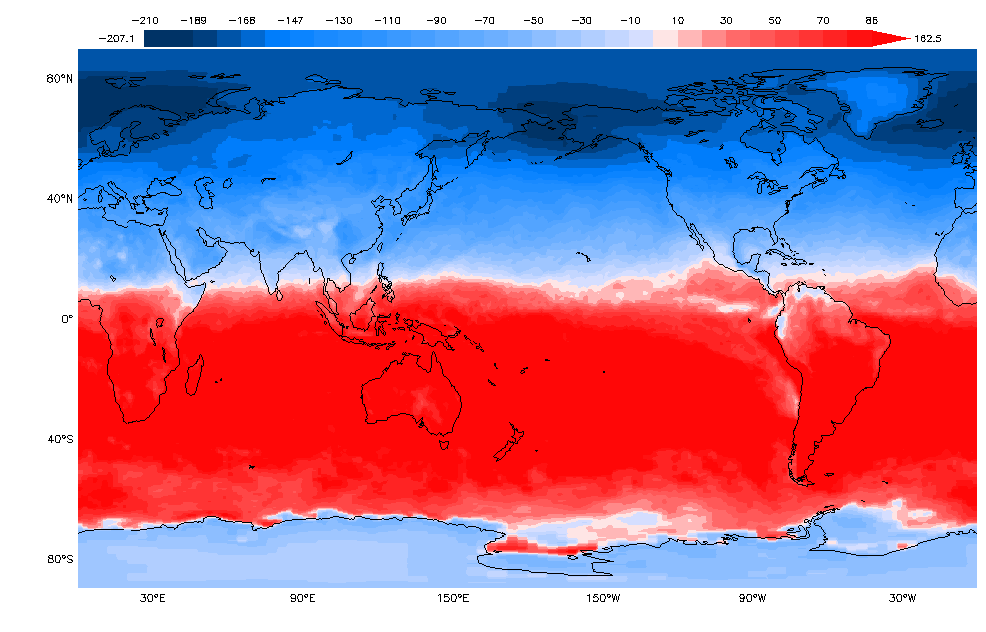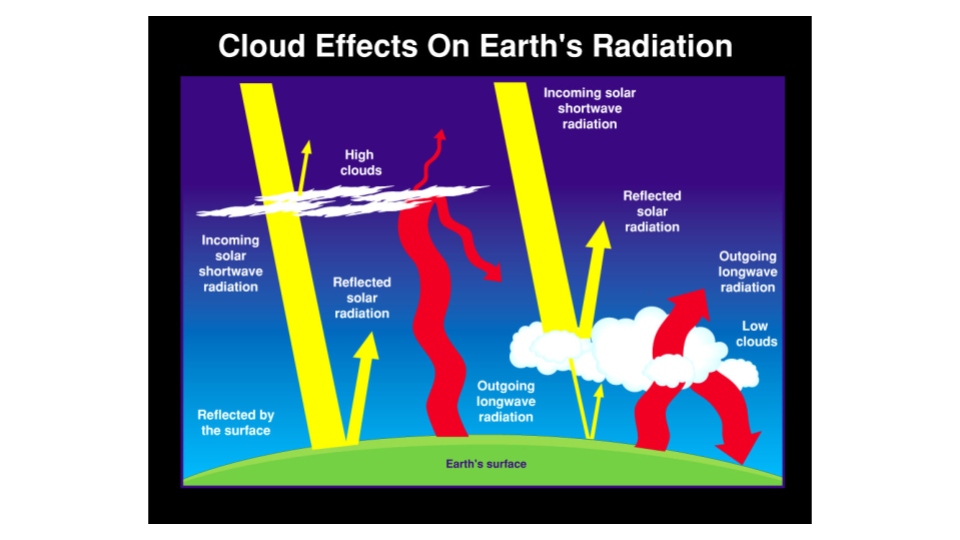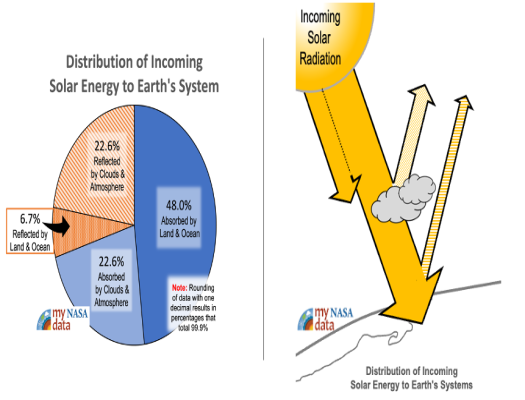





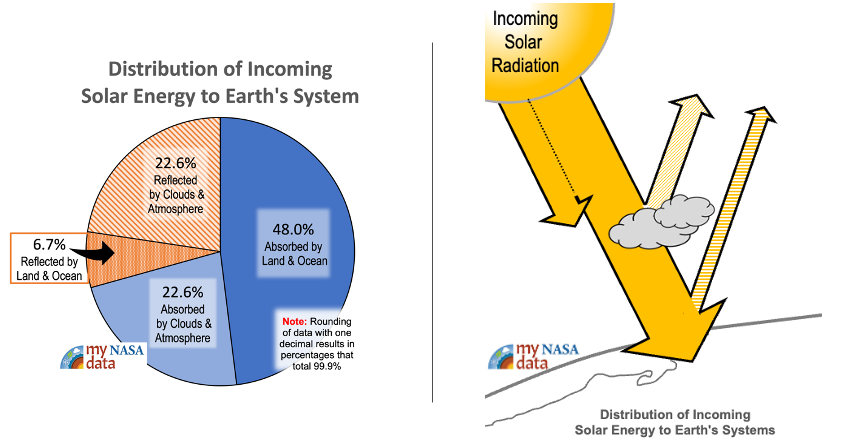

Earth strives to maintain a balance between the overall amount of incoming and outgoing energy at the top of the atmosphere. This is called Earth’s energy budget or Earth's radiation budget.
>> Read More >>
Just one moment,
loading Earth as a System...
Featured Lesson Plans
-
-
-
-
-
-
-
-
Grade Level: 6-8, 9-12
A kinesthetic activity that challenges students to participate in a model that describes the fate of solar energy as it enters the Earth system. A good initial lesson for Earth’s energy budget, students unravel the benefits and limitations of their model.
Grade Level: 6-8, 9-12
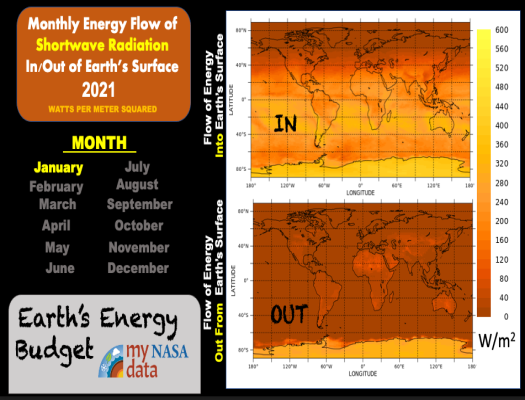
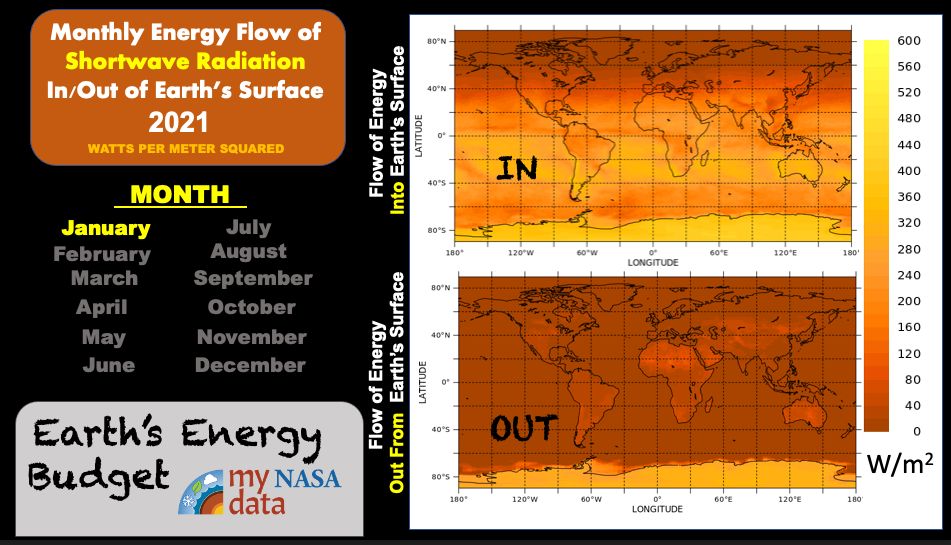
Students construct explanations about Earth’s energy budget by connecting a model with observations from side-by-side animations of the monthly mapped data showing incoming and outgoing shortwave radiation from Earth’s surface.
Grade Level: 6-8
Students will examine how radiation, conduction, and convection work together as a part of Earth’s Energy Budget to heat the atmosphere.
Grade Level: 9-12
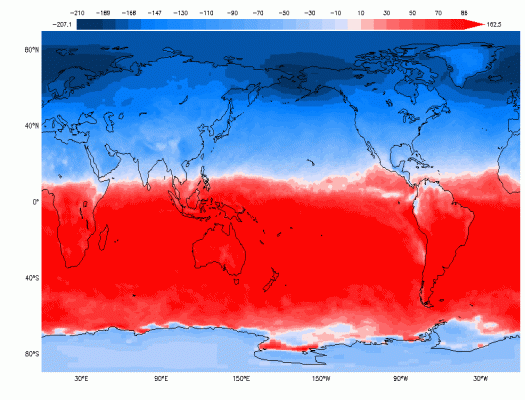
Students move through a series of short activities to explore and evaluate global solar radiation data from NASA satellites. In this process, students make qualitative and quantitative observations about seasonal variations in net energy input to the Earth System.
Grade Level: 6-8, 9-12
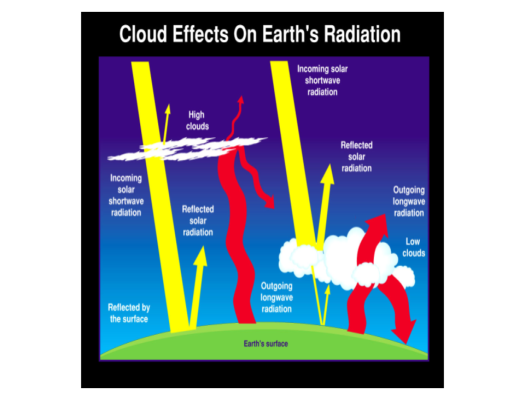
Students will investigate the role of clouds and their contribution (if any) to global warming. Working in cooperative groups, students will make a claim about the future role clouds will play in Earth’s Energy Budget if temperatures continue to increase.
Grade Level: 6-8
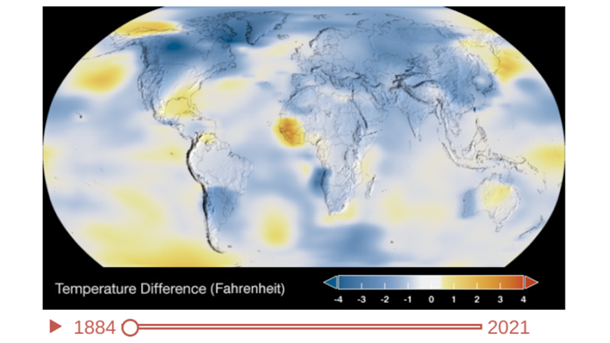
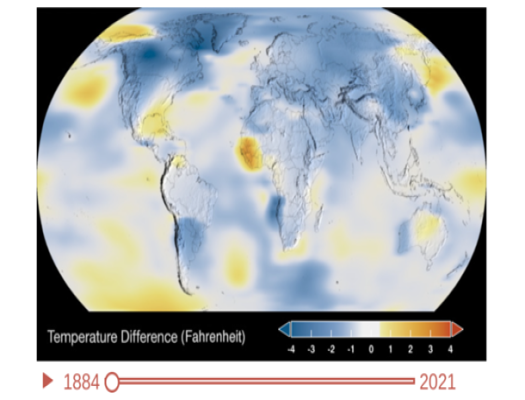
Students will watch and examine a NASA animation of Earth’s rising surface temperatures over an almost 150 year period.
Grade Level: 6-8, 9-12
Students will analyze and interpret maps of the average net atmospheric radiation to compare the flow of energy from the Sun toward Earth in different months and for cloudy versus clear days. Students will draw conclusions and support them with evidence.
Grade Level: 3-5, 6-8, 9-12
Students will analyze and interpret graphs to compare the flow of (shortwave) energy from the Sun toward China over the course of a year on cloudy versus clear days. Students will draw a conclusion and support it with evidence.
Previous
Next
Earth's Energy Budget Lesson Plan list
Grade Level: 6-8,
9-12
A kinesthetic activity that challenges students to participate in a model that describes the fate of solar energy as it enters the Earth system. A good initial lesson for Earth’s energy budget, students unravel the benefits and limitations of their model.
Grade Level: 6-8,
9-12
Students construct explanations about Earth’s energy budget by connecting a model with observations from side-by-side animations of the monthly mapped data showing incoming and outgoing shortwave radiation from Earth’s surface.
Grade Level: 6-8
Students will examine how radiation, conduction, and convection work together as a part of Earth’s Energy Budget to heat the atmosphere.
Grade Level: 9-12
Students move through a series of short activities to explore and evaluate global solar radiation data from NASA satellites. In this process, students make qualitative and quantitative observations about seasonal variations in net energy input to the Earth System.
Grade Level: 6-8,
9-12
Students will investigate the role of clouds and their contribution (if any) to global warming. Working in cooperative groups, students will make a claim about the future role clouds will play in Earth’s Energy Budget if temperatures continue to increase.
Grade Level: 6-8
Students will watch and examine a NASA animation of Earth’s rising surface temperatures over an almost 150 year period.
Grade Level: 6-8,
9-12
Students will analyze and interpret maps of the average net atmospheric radiation to compare the flow of energy from the Sun toward Earth in different months and for cloudy versus clear days. Students will draw conclusions and support them with evidence.
Grade Level: 3-5,
6-8,
9-12
Students will analyze and interpret graphs to compare the flow of (shortwave) energy from the Sun toward China over the course of a year on cloudy versus clear days. Students will draw a conclusion and support it with evidence.
Earth Energy Budget landing page. Explore maps, graphs, data, and related education resources. These resources include lesson plans, mini lessons, activities, and datasets for teachers and students.