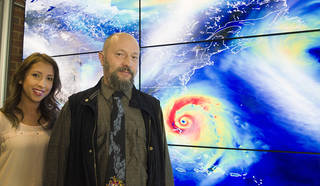
Every day, scientists at NASA work on creating better hurricanes on a computer screen. At NASA’s Goddard Space Flight Center in Greenbelt, Maryland, a team of scientists spends its days incorporating millions of atmospheric observations.

Select a Sphere:



Every day, scientists at NASA work on creating better hurricanes on a computer screen. At NASA’s Goddard Space Flight Center in Greenbelt, Maryland, a team of scientists spends its days incorporating millions of atmospheric observations.
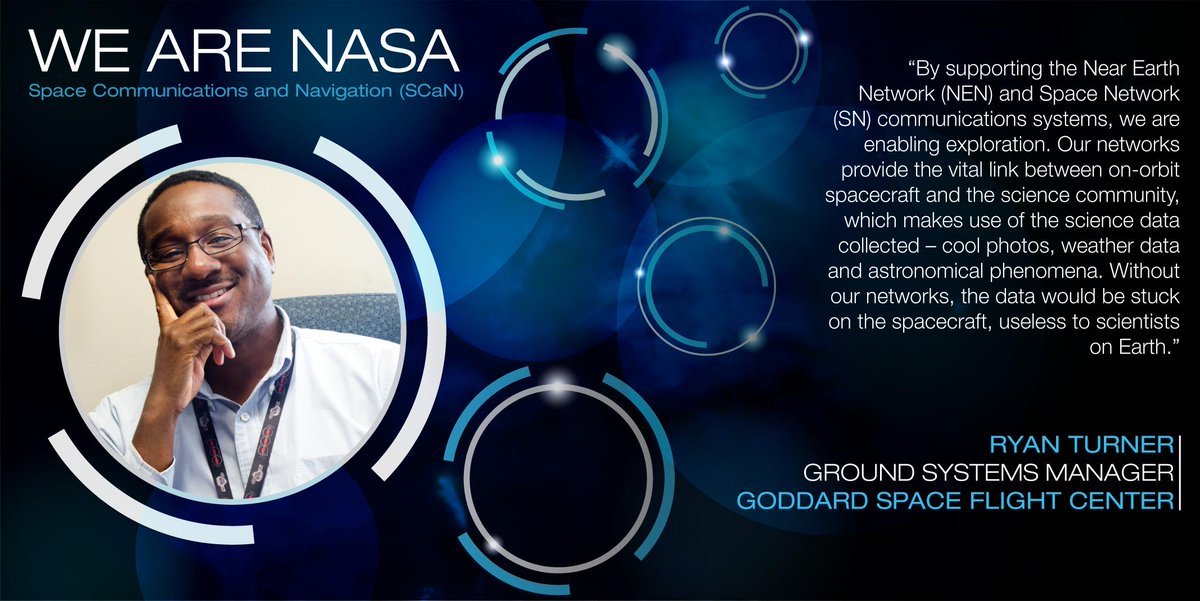
Ryan Turner says "My career has focused on software and software is ubiquitous, so I have been involved in many different projects. There is a lot of flexibility with software.

Learn about Erika Podest's journey from a childhood in Panama to a career at NASA as a Research Scientist.
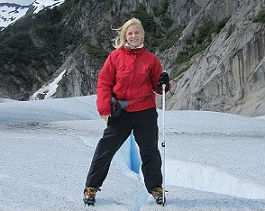
Michelle Gierach has a passion for Earth Science. She serves as a project scientist for the Physical Oceanography Distributed Data Archive Center (PO.DAAC) and ocean scientist at NASA Jet Propulsion Laboratory (JPL).

Charles Gatebe is a climate scientist who studies reflected sunlight to improve our understanding of the composition of the atmosphere and surface properties, including land and ocean, and impact on Earth's radiation budget and climate.

Read this interview with Kristopher Bedka to find out more about life as a Senior Research Scientist at NASA.
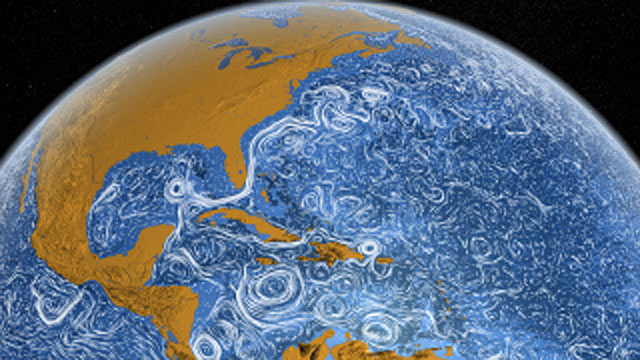
Oceanography covers a wide range of topics, including marine life and ecosystems, ocean circulation, plate tectonics and the geology of the seafloor, and the chemical and physical properties of the ocean.

Dr. Norman Loeb, an atmospheric scientist at NASA’s Langley Research Center in Hampton, Virginia, is the principal investigator for an experiment called the Clouds and the Earth’s Radiant Energy System (CERES).

Meet Jim Crawford, lead project scientist in atmospheric chemistry from NASA’s Langley Research Center in Hampton, Virginia.

Ricky is a Software Engineer who works for the NASA Clouds and the Earth's Radiant Energy System (CERES) Project with the group that specializes in clouds. He develops software to ensure that the satellite data collected about clouds are accurate and accessible.
These education resources highlight the STEM workforce careers and jobs, as well as showcase the scientists, engineers, technologists/technicians, and mathematicians who make NASA Earth missions possible.

