STEM Career Connections
So, You Think You Can be an Oceanographer
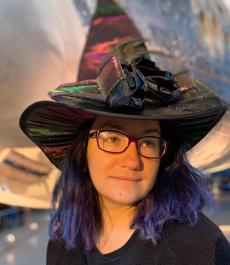
Dr. Ivona Cetinić, Oceanographer
Perhaps you love water, you enjoy swimming or aquatic sports, you are curious about marine life, or you simply dream about a job related to the ocean. But even if you have never heard of what oceanographers do, you may already be practicing some skills to become an oceanographer.
Your Skills
Consider if you ever practice any of the following skills:
|
Skill |
Example |
|
Using satellite data. |
|
|
Asking questions in or out of school. |
|
|
Working collaboratively. |
|
|
Observing carefully. |
|
|
Making connections. |
|
|
Managing feelings. |
|
|
Staying active. |
|
|
Valuing art and creativity. |
|
|
Taking risks. |
|
If you have practiced any of these skills, they will be very useful if you decide to become an oceanographer! If you have not practiced these skills yet, you can start now. Let’s meet an oceanographer, and we will see how your skills match up with her skills.
Meet Dr. Ivona Cetinić
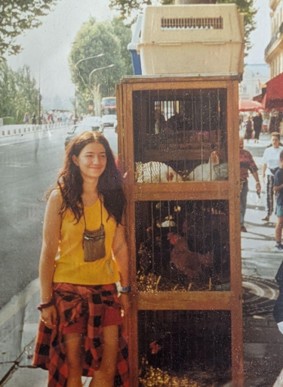
Ivona at about 20 years old, finding bunnies and chickens in Paris. Credit: Vinko Zlatic
Dr. Ivona Cetinić is an oceanographer who works at NASA Goddard Space Flight Center. She studies tiny living things in the ocean called phytoplankton and tries to understand how they affect the ocean and the Earth.
She uses satellites and special tools to study the ocean from far away. These tools help her see things we cannot observe with our eyes, like what is in the water and how it changes over time.
Ivona has also traveled around the world on research ships to study the ocean up close. On some of these trips, she was the lead scientist, helping guide the research and the team.
She works on large NASA projects that study how the ocean, air, and climate are connected. One of these missions is called PACE (Plankton, Aerosol, Cloud, ocean Ecosystem). PACE uses super cool, high-tech tools to take a picture of almost the entire Earth—the oceans, the air, and the land—every one or two days. This amazing ability gives us new information about how healthy and diverse sea plants are, what's happening with plants on land, the different kinds of clouds, and things floating in the air like smoke, dust, and bad gases such as the one called nitrogen dioxide.
Your Shared Skills
Next you will complete a table called Practices and Skills that shows the connection between skills and career practices. A skill is the ability to do something. Practices are habits applying skills for a purpose and continuing to improve the skills. It is possible for a skill to connect to more than one career practice. Now you know more about how Ivona uses skills to work as an oceanographer at NASA. So, it is time to complete the following table with examples of activities that you and Ivona do. Feel free to rewatch the video to help you complete the table. You may also add any other skills you identify, as well as examples of activities you would like to do to practice a new skill!
-
Watch the following short video and pay close attention to how Ivona uses different skills to do her work as a NASA oceanographer.
-
How might the life skills Dr. Cetinic mentions be important for any career?
Practices and Skills
| Career Practices |
Skill that Supports Practice/s |
Example of How Ivona Uses This Skill |
Example of How You Use This Skill |
| Asking Questions and Defining Problems |
Using satellite data. |
||
| Analyzing and Interpreting Data or Using Models |
Asking questions in or out of school. |
||
| Analyzing and Interpreting Information or Communicating Information |
Working collaboratively. |
||
|
Planning and carrying out investigations |
Observing carefully. |
||
| Obtaining Information or Analyzing and Interpreting Data |
Making connections. |
||
| Engaging in Argument from Evidence |
Managing feelings. |
||
| Asking Questions and Defining Problems |
Taking risks. |
||
| Life Skill |
Valuing art and creativity. |
||
| Life Skill |
Staying active. |
How might these Career Practices be important for this career?
Just for Fun
What is your favorite ice cream flavor? Ivona’s favorite ice cream flavor is pistachio! Whether or not you and Ivona have the same ice cream preferences, you and Ivona sure share many important skills!
Reflection
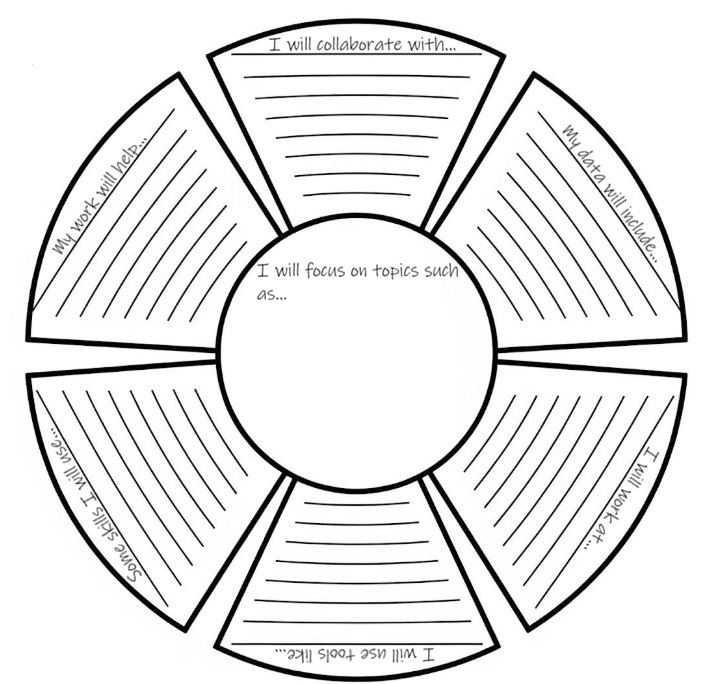
Many of your current activities are already preparing for a very bright future. If you are (or become!) curious about exploring the ocean and marine ecosystems, you are practicing many skills that will help you succeed as an Oceanographer. Feel free to use the diagram below to envision your Oceanographer career. You can draw yourself as an oceanographer in the center of the diagram!
Answer Key
Teachers who are interested in receiving the answer key, please complete the Teacher Key Request and Verification Form. We verify that requestors are teachers prior to sending access to the answer keys as we’ve had many students try to pass as teachers to gain access.