STEM Career Connections
So, You Think You Can be a Conservation Scientist
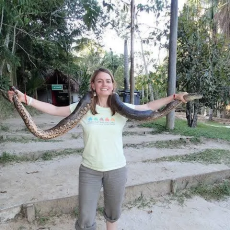
Dr. Erika Podest, Conservation Scientist, holding a snake outdoors.
Why Does NASA Study Earth?
Do you only think of astronauts, rovers, and distant planets when you hear "NASA"? Think again! Since Earth is the only planet we call home, NASA actually spends a ton of time studying it. Starting back in 1960, NASA began using satellites, planes, and ships—plus some super-smart computer models—to track everything from daily weather patterns to how the atmosphere, land, and oceans interact. By getting this "big picture" view from space, scientists are finding answers to huge questions about how our planet works, how we can protect our food and natural resources, and how to stay safer during natural disasters. The best part? NASA shares all this data with the world so everyone can help understand and protect our home.
This means the job of many NASA scientists involves research about biology, ecology, and conservation. They might be tracking plant and animal patterns, turning research into useful information for people who manage our land and water, or helping leaders make better decisions to keep ecosystems healthy and sustainable.
Perhaps you enjoy spending time outdoors—whether it's hiking, swimming in a lake, or caring for your favorite tree. Maybe you love animals, grow your own plants, want to help your community prepare for natural disasters, or care about making sure everyone has access to healthy food. The possibilities in a conservation science career are endless! Even if you haven't thought about these careers before, you might be surprised to learn that you already practice many skills used by professional conservation scientists.
Your Skills
What would you say if someone told you that maybe you are already preparing for a career as a conservation scientist?
Consider if you ever practice any of the following skills:
|
Skill |
Examples |
|
Looking for opportunities. |
|
|
Persevering when something is hard or does not work out as expected. |
|
|
Using knowledge from different subjects to accomplish a task. |
|
|
Sharing knowledge. |
|
|
Learning from others. |
|
|
Staying informed. |
|
|
Publishing written work. |
|
If you have practiced any of the skills above, please know they can be very helpful for a career as a conservation scientist!
Meet Dr. Erika Podest
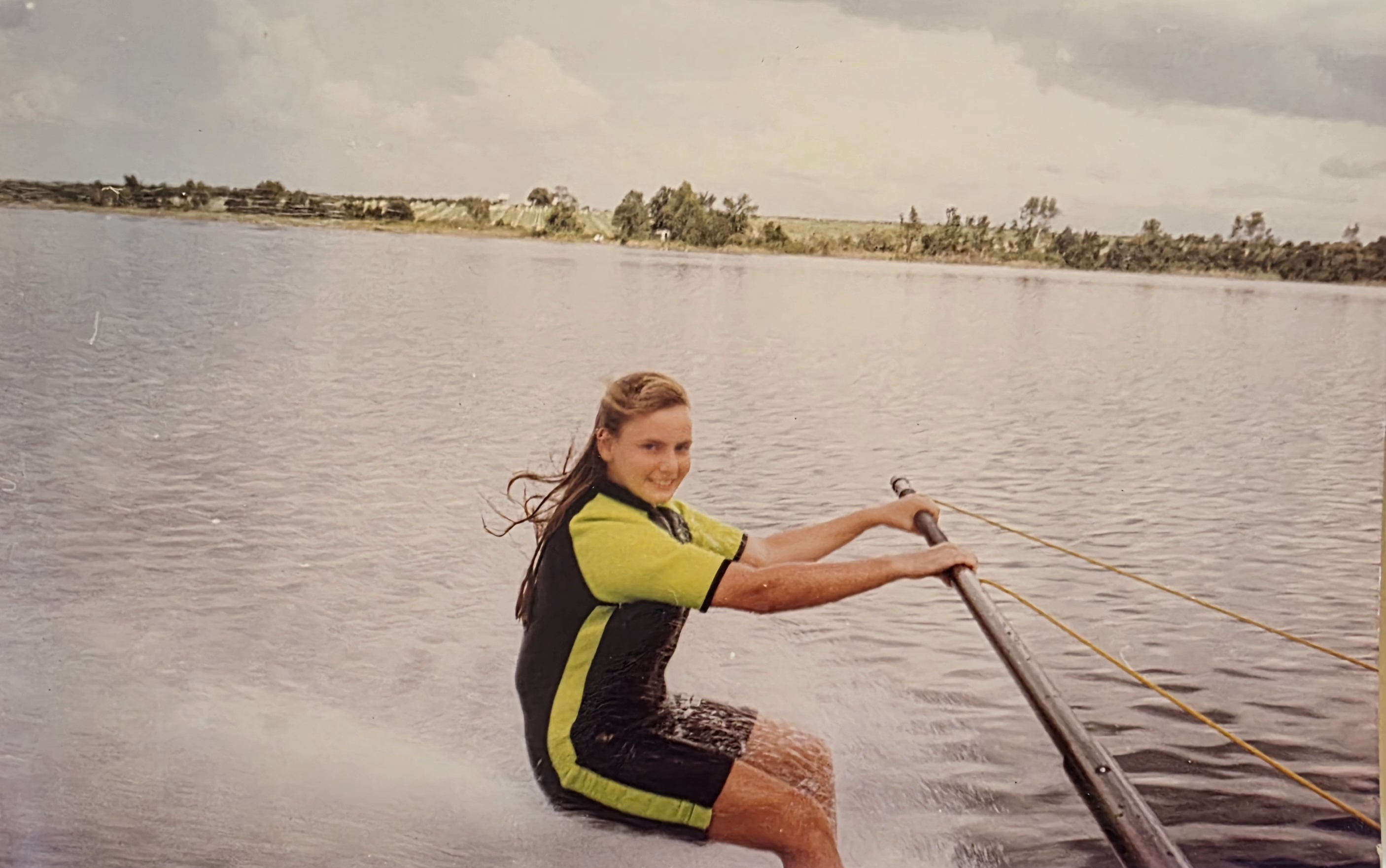
Erika is a NASA scientist at the Jet Propulsion Laboratory who specializes in using satellite data to study wetlands and boreal forests to understand how they change over time.
She grew up in Panama, surrounded by nature, which gave her a deep respect for the environment. Her career began when she was training to be a pilot. While flying, she took photos and realized how different landscapes look from the air. This sparked her interest in “remote sensing”. Remote sensing is a way to study Earth from a distance, without needing to be there in person. Instead of just gathering information on the ground, scientists use satellites, cameras, and sensors high above Earth. These tools capture images and measure details like the health of plants and crops, soil moisture, weather patterns, and signs of floods or fires.
While wetlands cover only a small portion of Earth, Erika describes them as the "arteries and veins" of our landscape, playing a massive role in controlling floods, cleaning our water, and locking away huge amounts of carbon. Her work is far from just sitting behind a computer screen; it's hands-on. Sometimes she spends weeks trekking through the Amazon, camping out and facing long, demanding days in the field to verify what her satellite data is showing. When she isn't busy researching, Erika is quite the thrill-seeker—she loves windsurfing and has a knack for card magic. Ultimately, her favorite part of the job isn't just the data; it’s the constant learning about the natural world and the chance to inspire the next generation to get curious about science.
Erika also serves as the Community Engagement and Training Coordinator for the NISAR Mission. Think of NISAR as a high-tech health check-up for our planet. Its job is to keep a close watch on how Earth’s land, water, ice, and forests change over time. By scanning the globe from space every few days, it helps scientists track important things like rising sea levels, groundwater movement, and even natural hazards.
Your Shared Skills
Next you will complete a table that shows the connection between skills and career practices. A skill is the ability to do something. Practices are habits applying skills for a purpose and continuing to improve the skills. It is possible for a skill to connect to more than one career practice. Now you know more about how Erika succeeds in her career as a conservation scientist at NASA.
-
Watch the following short video to learn more about what it means for Erika to be a scientist. Erika speaks Spanish in this video, which has English subtitles. If you’d like, you can also show the transcript while you play the video. To show the transcript, click on the “more” option below the video. Then, scroll down and click on “Show transcript”. A transcript box will open to the right of the video, displaying the captions along with timestamps. You can click on any caption to jump to that part of the video. The transcript will automatically show in English. You can also switch the language of the transcript to Spanish, on the bottom of the transcript box.
-
Complete the following table titled Practices and Skills with examples of activities that you and Erika do. Feel free to rewatch the video to help you complete the table. You may also add any other skills you identify, as well as examples of activities you would like to do to practice a new skill!
Practices and Skills
| Career Practices |
Skill that Supports Practice/s |
Example of How Erika Uses This Skill |
Example of How You Use This Skill |
| Asking Questions and Defining Problems |
Looking for opportunities. |
||
| Analyzing and Interpreting Data or Using Models |
Persevering when something is hard or does not work out as expected. |
||
| Obtaining Information or Analyzing and Interpreting Data |
Using knowledge from different subjects to accomplish a task. |
||
| Constructing Explanations |
Sharing knowledge. |
||
| Analyzing and Interpreting Information or Communicating Information |
Learning from others. |
||
| Obtaining Information or Analyzing and Interpreting Data |
Staying informed. |
||
| Engaging in Argument from Evidence |
Publishing written work. |
||
| Communicating Information |
Speaking another language. |
How might these Career Practices be important for this career?
Just for Fun
What is your favorite ice cream flavor? Erika’s favorite ice cream flavor is dark chocolate! Whether or not you and Erika have the same ice cream preferences, you and Erika share many important skills!
Reflection
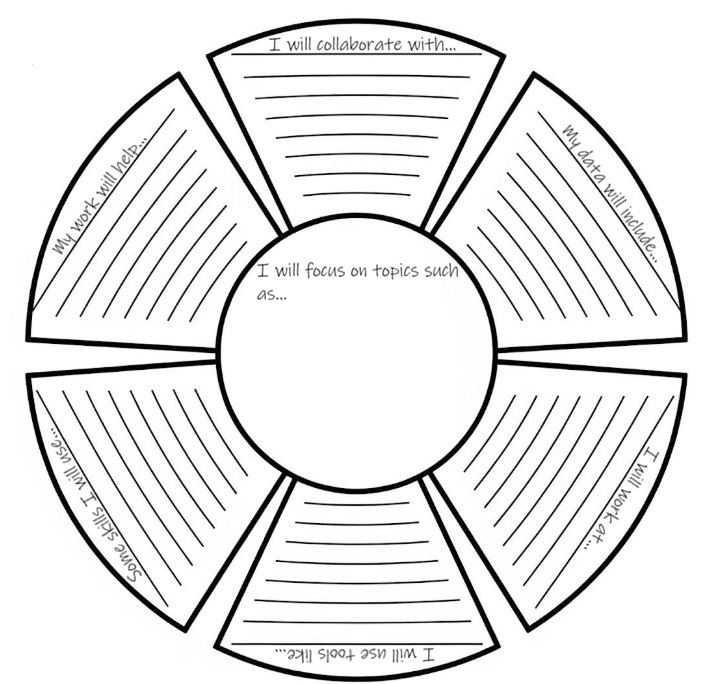
Many of your current activities are already preparing for a very bright future. If you are (or become!) curious about wetland, forests, or any aspect of the natural environment around you or anywhere in the world, you are practicing many skills that will help you succeed as a Conservation Scientist. Feel free to use the diagram below to envision your Conservation Scientist career!
Answer Key
Teachers who are interested in receiving the answer key, please complete the Teacher Key Request and Verification Form. We verify that requestors are teachers prior to sending access to the answer keys as we’ve had many students try to pass as teachers to gain access.