



List of all Geosphere Lesson Plans

Select a Sphere:

black atmosphere icon
Atmosphere
black biosphere icon
Biosphere
black cryosphere icon
Cryosphere
color geosphere icon
Geosphere
black hydrosphere icon
Hydrosphere
earth systems icon
Earth as a System


Select a Grade Band:
all grade icon
3-12
elementary grade icon
3-5
middle grade icon
6-8
high grade icon
9-12
Google document icon.
Grade Level: 3-5, 6-8, 9-12

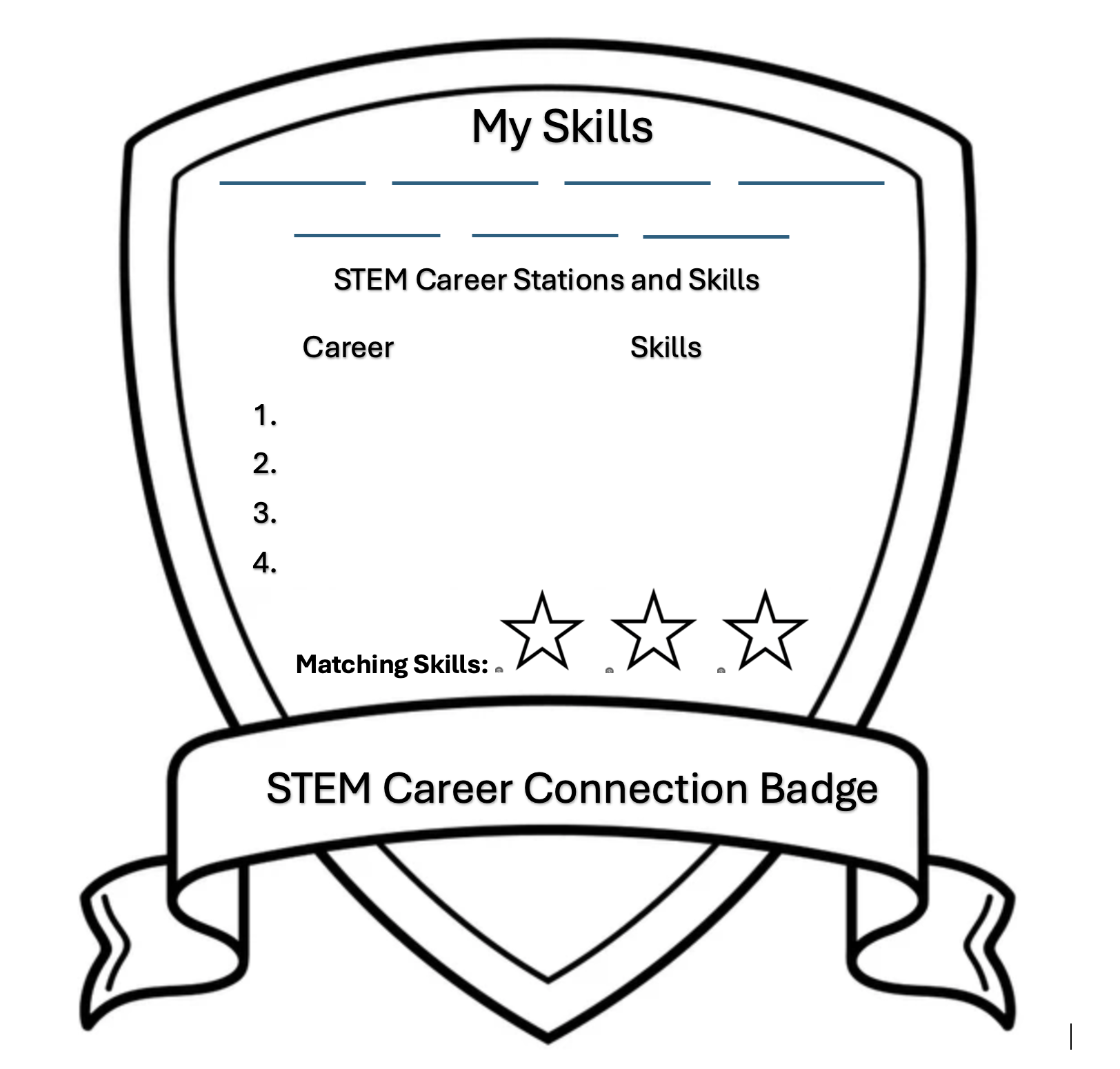
Working in teams, students learn how a STEM professional uses STEM practices to solve real-world problems, design a STEM Career Connection Badge that highlights their takeaways about that profession, and build a training station to teach their classmates during a STEM Career Conne


Grade Level: 3-5, 6-8, 9-12

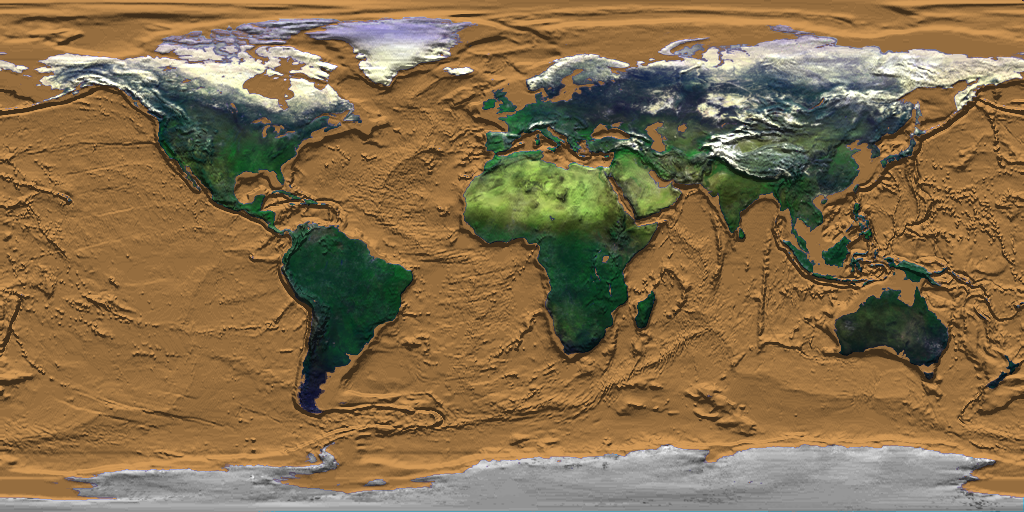
The activities in this guide will help students understand variations in environmental parameters by examining connections among different phenomena measured on local, regional and global scales.

Grade Level: 6-8, 9-12

Students review Earth System phenomena that are affected by soil moisture.  They analyze and evaluate maps of seasonal global surface air temperature and soil moisture data from NASA satellites. Building from their observations, students will select a location in the U.S.

Grade Level: 6-8, 9-12

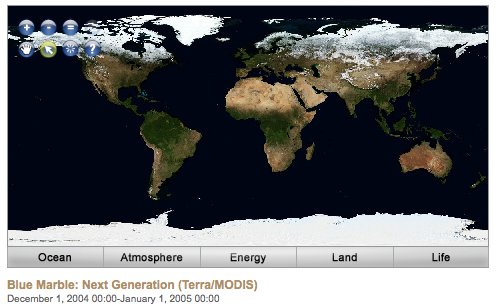
Students are introduced to the Earthrise phenomenon by seeing the Earth as the Apollo 8 astronauts viewed our home planet for the first time from the Moon.  They will analyze a time series of mapped plots of Earth science variables that NASA monitors to better understand the Earth

Grade Level: 6-8, 9-12

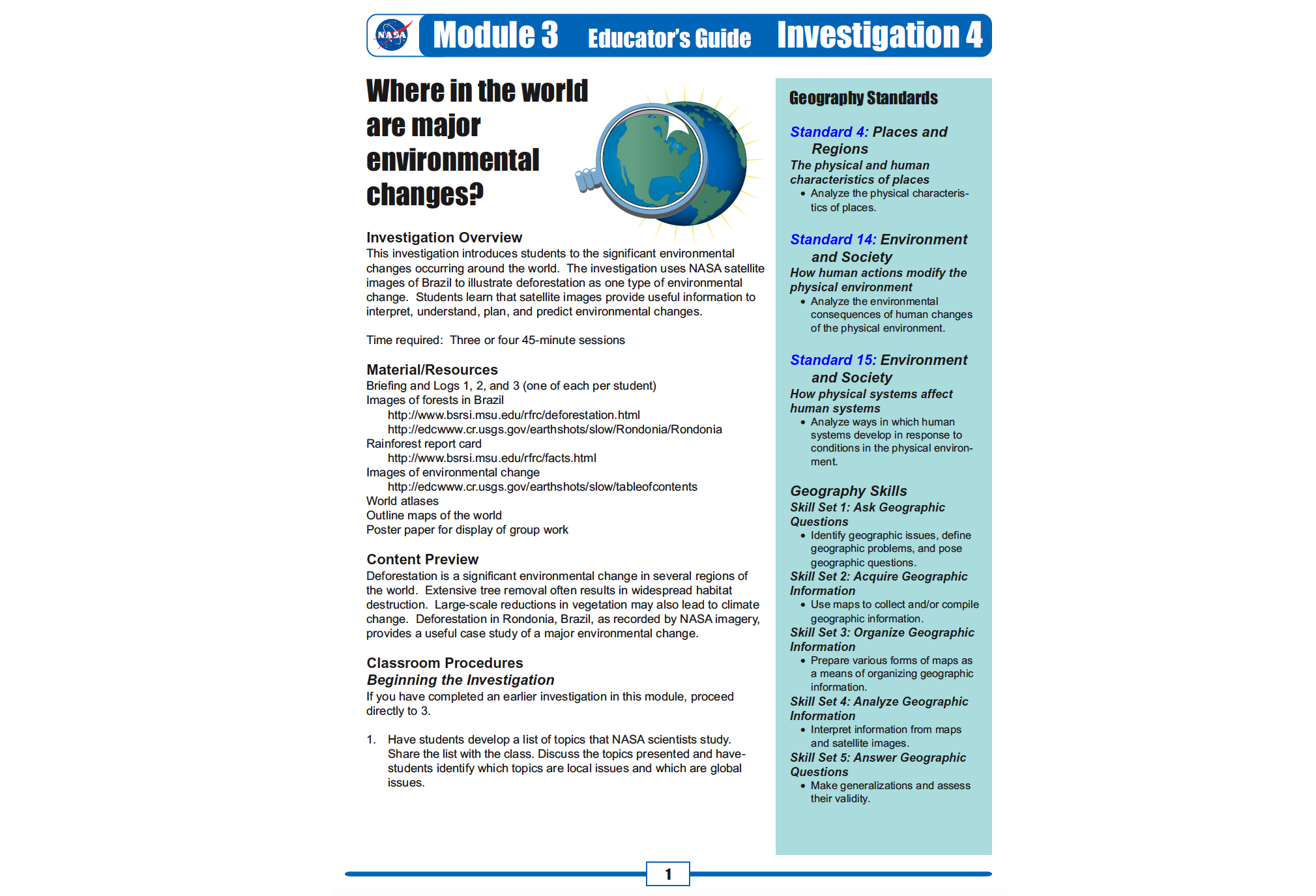
This investigation introduces students to the significant environmental changes occurring around the world. The investigation uses NASA satellite images of Brazil to illustrate deforestation as one type of environmental change.

Grade Level: 6-8, 9-12

To investigate the different rates of heating and cooling of certain materials on earth in order to understand the heating dynamics that take place in the Earth’s atmosphere.

These NASA lessons support Next Generation Science Standards (NGSS) and three dimensional learning of the Earth System. These include activities where students interact with NASA maps, graphs, and datasets from the atmosphere, biosphere, cryosphere, geosphere, hydrosphere and the earth system.